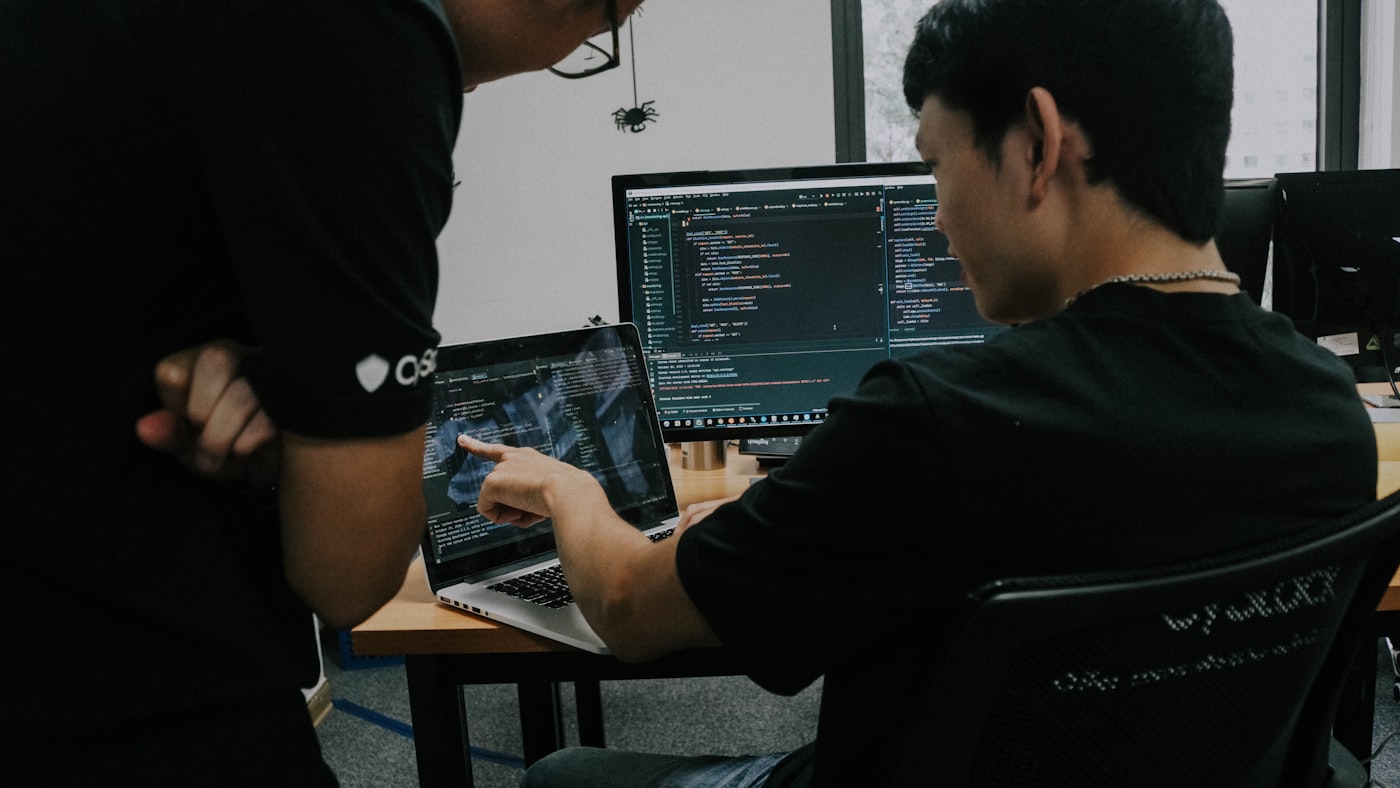
A decade ago, the phrase "Pakistani game studio" barely existed. Today, teams working out of Islamabad, Rawalpindi, Lahore and Karachi are publishing games that chart in markets they have never visited. The distance between a room in Bahria Town and a player's phone in São Paulo has collapsed to the size of an app download.
This shift did not happen by accident, and it is not primarily a story about patriotism or untapped potential. It is a story about what happens when the cost of reaching a global audience falls to nearly zero and a large, young, English-literate workforce notices.
Talent is evenly distributed across the world. Opportunity, for the first time, is starting to be too.
The new reality for emerging game markets
A generation that grew up playing is now building
The developers entering Pakistan's studios today are the first generation to have grown up with smartphones in their hands. They did not learn game design from textbooks — they learned it from thousands of hours inside games they loved, absorbing pacing, feedback and difficulty curves without ever calling it study.
That instinct for what feels good to play is the one qualification that cannot be taught quickly and cannot be faked. A developer who has spent a decade as a player can tell within thirty seconds whether a control scheme is wrong, even if they cannot yet articulate why. Everything else — the engine, the language, the tooling — is learnable in months.
Combine that instinct with free world-class engines, an ocean of open tutorials, and asset stores that put professional tools within a student's budget, and the barrier to entry very nearly disappears. What remains is the genuinely hard part: taste, discipline, and finishing.

What is fuelling the rise
- Free professional engines with no upfront licensing cost
- A median age near 20 — digital-native and fast to learn
- English proficiency that unlocks global publishing and clients
- A cost base that makes ambitious projects viable on modest budgets
Mobile-first, because that is where the players are
Pakistani studios did not attempt to compete with hundred-million-dollar console productions, and that restraint has been the single most sensible strategic decision the sector has made. They went where the audience and the economics actually are: mobile.
Board games, hyper-casual titles, arcade shooters and puzzle games are genres where a team of six can still ship something genuinely world-class. These are categories won by iteration and feel rather than by budget, which makes them precisely the categories a small, hungry team can win.
This focus is a strength rather than a limitation. A real-time multiplayer Ludo title can reach tens of millions of players without a single billboard, carried entirely by store visibility and word of mouth. The store is the great equaliser — it does not know or care where the build was compiled.
Where small teams can genuinely compete
- Real-time multiplayer board games
- Hyper-casual and arcade titles
- Puzzle and casual mechanics
- Live-ops-driven long-tail growth
What the twin cities are actually like to build in
Islamabad and Rawalpindi function as a single technology market despite being administratively separate. Between them they hold a concentration of engineering graduates, a lower cost of living than Karachi, and — decisively — enough companies that a developer can change employers without changing cities. That last point is the mechanism by which knowledge circulates.
The practical texture is unglamorous. Studios operate from ordinary commercial buildings rather than campuses. Teams are small, usually between five and twenty. Almost everyone has done client work to fund something of their own, and most know each other, which means reputation travels fast in both directions.
What the twin cities lack is the density that makes hiring easy. A studio needing a senior technical artist may search for months, because the pool of people who have shipped several titles is still measured in dozens rather than hundreds. That constraint shapes what gets built more than any other local factor.

The local conditions that matter
- Enough companies that job mobility does not require relocation
- Cost of living that stretches modest budgets
- Small teams where reputation travels quickly
- A senior talent pool still measured in dozens
The road is real — and so are the roadblocks
None of this is to pretend the path is smooth. Payment infrastructure remains the most persistent friction: collecting store revenue, paying for cloud services and engine licences, and running user-acquisition campaigns all assume rails that work reliably in both directions, and frequently they do not.
Access to early funding is thin, so most studios bootstrap from client work. That works, but it caps ambition — a team funding a game from services revenue builds a smaller game than its skill would allow, and takes longer doing it.
And retaining senior people is a permanent challenge. The moment a developer here becomes genuinely good, they become globally employable, and a remote contract paying in dollars usually outbids a local studio. Pakistani studios therefore compete not with each other but with the entire international remote job market.
The friction still to solve
- Smoother international payments and payouts
- Local early-stage funding beyond client-services revenue
- Structured mentorship to grow mid-level designers into leads
- Publishing know-how — ASO, live-ops and monetisation at scale
What "world stage" actually means in practice
The phrase invites a misreading. Entering global gaming does not mean a Pakistani studio winning awards alongside CD Projekt or Supercell, and framing it that way sets a bar that guarantees disappointment. It means something more mundane and more achievable: titles built here competing on equal footing in the same storefronts, judged by the same players, on the same terms.
By that definition Pakistan is already on the world stage. Games built in Rawalpindi are installed daily by people who will never know or care where they came from — which is precisely what a level playing field looks like.
The question that remains is not access but depth: how many studios reach a size where they can take real creative risks, and whether the people who learn how to do that stay to teach the next group. Access has been solved. Depth is the work of the next decade.
A realistic definition of arriving
- Competing in the same storefronts on identical terms
- Players who neither know nor care about origin
- Studios large enough to take genuine creative risks
- Knowledge staying long enough to compound locally
The world stage is no longer far away
The story of Pakistani studios is not one of arrival — it is one of acceleration. The talent was always here. What changed is that the tools, the market and the distribution finally caught up to it, and the distance to a global audience has never been shorter.
At Ah Game Studio that is the future we build toward every day: titles made in Pakistan, played everywhere. The world stage is not somewhere we are trying to reach — it is where we already publish.
Frequently asked questions
Are Pakistani studios really competing globally?
Yes. Pakistani teams regularly publish mobile titles reaching millions of downloads worldwide, competing on quality and craft rather than marketing budget, thanks to the level playing field of app stores.
Which game genres are Pakistani studios strongest in?
Mobile-first genres — real-time multiplayer board games, hyper-casual, arcade, puzzle and casual titles — where a focused small team can ship something world-class without a blockbuster budget.
Why are Islamabad and Rawalpindi a hub for game development?
They function as a single technology market with a concentration of engineering graduates, a lower cost base than Karachi, and enough companies that developers can change employers without relocating — which is how knowledge circulates.
What is still holding the industry back?
Mainly friction around international payments, limited early-stage funding that caps project ambition, and retaining senior developers who become globally employable and are outbid by remote contracts.