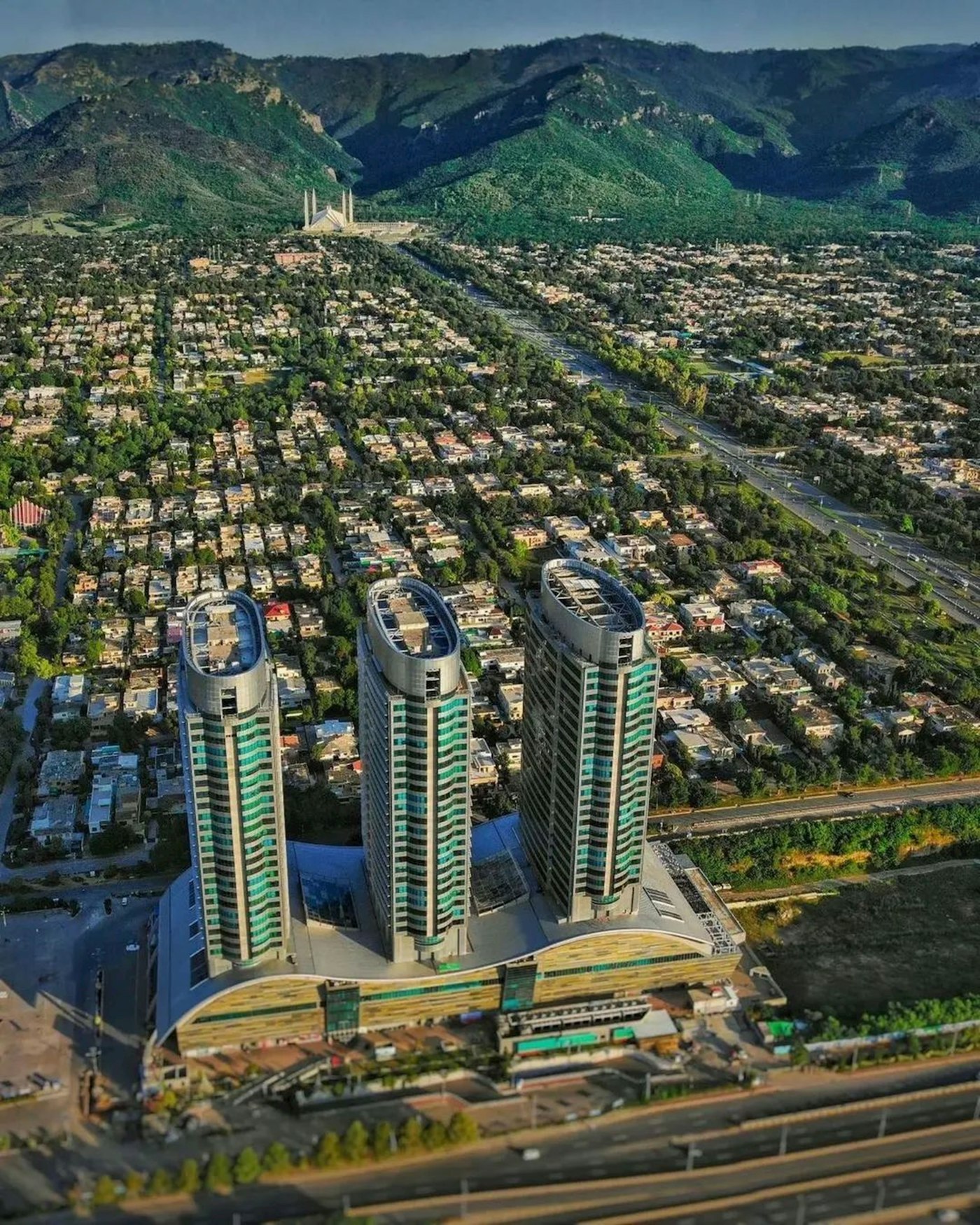
The phrase "the next Silicon Valley" has been applied to something like forty cities and has never once turned out to be accurate. Bangalore, Tel Aviv, Berlin, Nairobi, Lahore — each has been assigned the label by someone, and none has become the Valley, because the Valley is not a model that can be adopted.
It is the outcome of a specific and unrepeatable sequence: decades of defence spending, one unusually entrepreneurial university, a legal environment that made non-compete clauses unenforceable, and sixty years of returns compounding locally. You cannot decide to have had that history.
Copying the outputs of an ecosystem is cargo cult. Copying its mechanisms is strategy.
Why the Valley cannot be reproduced
Most attempts to build a Silicon Valley reproduce its visible features: an innovation district, a startup incubator, a government fund, a conference. These are outputs of the ecosystem, not inputs to it, and building them produces the appearance of a tech hub without the underlying circulation.
The genuinely causal features are less photogenic. California's refusal to enforce non-compete agreements meant engineers could leave and start competitors, which forced knowledge to circulate rather than pool. Early defence contracts provided decades of patient demand. And crucially, successful founders reinvested locally instead of moving their capital elsewhere.
None of those can be legislated into existence in five years, and a city that builds the incubator without the circulation gets a building with a nice sign on it.

Outputs commonly mistaken for inputs
- Innovation districts and incubator buildings
- Government venture funds without deal flow
- Conferences and startup weeks
- Branding campaigns announcing a "tech hub"
The three mechanisms that do transfer
Talent density transfers. When enough engineers live in one city, people can change jobs without changing cities, and every job change carries knowledge from one company into another. This is the actual mechanism of knowledge diffusion, and it is the one Pakistan is closest to achieving — Islamabad, Rawalpindi and Lahore already have the concentration.
Tolerance of honourable failure transfers. In markets where a failed startup ends a career, people take no risks and the ecosystem produces nothing interesting. Where a failure reads as experience, the same people try again with better judgement. This is cultural rather than legal, and it changes faster than people expect.
Local reinvestment transfers, and it is the one most often missing. A successful founder who moves their capital and family abroad removes both the money and the mentorship. One who stays and funds three younger teams creates the compounding loop that every functioning ecosystem runs on.
Mechanisms worth deliberately copying
- Geographic concentration enabling job mobility
- Failure treated as experience rather than disqualification
- Successful founders reinvesting where they succeeded
- Knowledge circulating through movement between companies
The model that actually fits Pakistan
Venture-scale ambition assumes venture-scale capital, and Pakistan does not have it. Rather than treating that as a deficiency to be corrected, it is more useful to design around it — which points toward capital-efficient product companies serving global markets from a low cost base.
That model is closer to Poland, Turkey or Vietnam than to California, and it has a genuine advantage: companies that reach profitability early control their own timelines. They do not have to raise on someone else's schedule, accept terms set by a distant fund, or grow faster than the business can support.
In an environment where local venture capital is scarce and foreign capital faces repatriation friction, early profitability is not a compromise imposed by circumstance. It is the correct strategy, and it happens to produce more durable companies.
A model suited to the actual conditions
- Capital efficiency instead of blitzscaling
- Global customers served from a low cost base
- Early profitability as strategic independence
- Products as the destination, services as the funding
Why games are a reasonable place to start
Games fit this model unusually well. Distribution is solved by the app stores, so there is no need to build a sales organisation. Feedback is immediate and quantitative — retention curves tell you within a week whether something works. And the capital requirement for a focused mobile title is within reach of a team funding itself from services.
They also build transferable capability. A studio that has shipped several titles has learned production management, art direction, live operations, analytics and monetisation, and every one of those skills applies to software products generally.
This is why a games sector is often the leading edge of a broader creative technology industry rather than a niche within it. The skills are general; the games are just where they get learned.
What makes games a viable starting point
- Distribution solved by platforms, no sales team required
- Immediate quantitative feedback on whether it works
- Capital requirement within reach of self-funding
- Capability that transfers to software products generally
What to measure instead of the comparison
If "become the next Silicon Valley" is the wrong target, something has to replace it, or the ambition dissolves into nothing. The useful replacements are boring and measurable: how many studios employ more than twenty people, how many have shipped a second successful product, how many senior engineers are still in the country after five years, and how much capital has been reinvested locally by people who succeeded here.
Those numbers are unglamorous, trackable and directly connected to the mechanisms that actually matter. A city that improves all four over a decade will have built something real, regardless of what anyone calls it.
The comparison to California, by contrast, is unmeasurable by construction — which is precisely why it survives so long as a slogan.
Metrics worth tracking instead
- Studios sustaining more than twenty employees
- Teams that have shipped a successful second product
- Senior engineers still local after five years
- Capital reinvested by locally successful founders
Why the city matters more than the country
Technology ecosystems form in cities, not nations. Nobody describes a Californian technology industry; they describe a Bay Area one. That distinction matters for Pakistan because national-level policy tends to spread resources thinly across provinces, while the mechanism that actually produces ecosystems is concentration.
Islamabad and Rawalpindi already hold the densest engineering concentration in the country. Policy that strengthens that specific cluster will produce more than the same budget distributed evenly, even though even distribution is politically far easier to defend.
Why concentration beats distribution
- Ecosystems form in cities, not at national scale
- Job mobility without relocation is the core mechanism
- Thin national spreading dilutes the density effect
- The twin cities are already the densest cluster
Not the next Valley — the first of something else
The ambition to become the next Silicon Valley is simultaneously unachievable and unnecessary. What is achievable is a durable, capital-efficient product industry built around talent density, tolerance of failure and local reinvestment — the three mechanisms that actually transfer.
That is a less romantic goal than the comparison it replaces. It is also specific enough to work toward, and considerably more likely to happen.
Frequently asked questions
Can Pakistan become the next Silicon Valley?
No — the Valley resulted from unrepeatable history: decades of defence spending, unenforceable non-competes, and sixty years of local compounding. The useful goal is copying its transferable mechanisms rather than its appearance.
Which mechanisms actually transfer between ecosystems?
Talent density that lets people change jobs without changing cities, cultural tolerance of honourable failure, and successful founders reinvesting locally instead of moving capital abroad.
What model suits Pakistan better?
Capital-efficient product companies serving global markets from a low cost base — closer to Poland, Turkey or Vietnam than to California, and more robust because they do not depend on continuous fundraising.
What should be measured instead of the comparison?
Studios sustaining more than twenty staff, teams shipping a successful second product, senior engineers still in the country after five years, and capital reinvested by founders who succeeded locally.